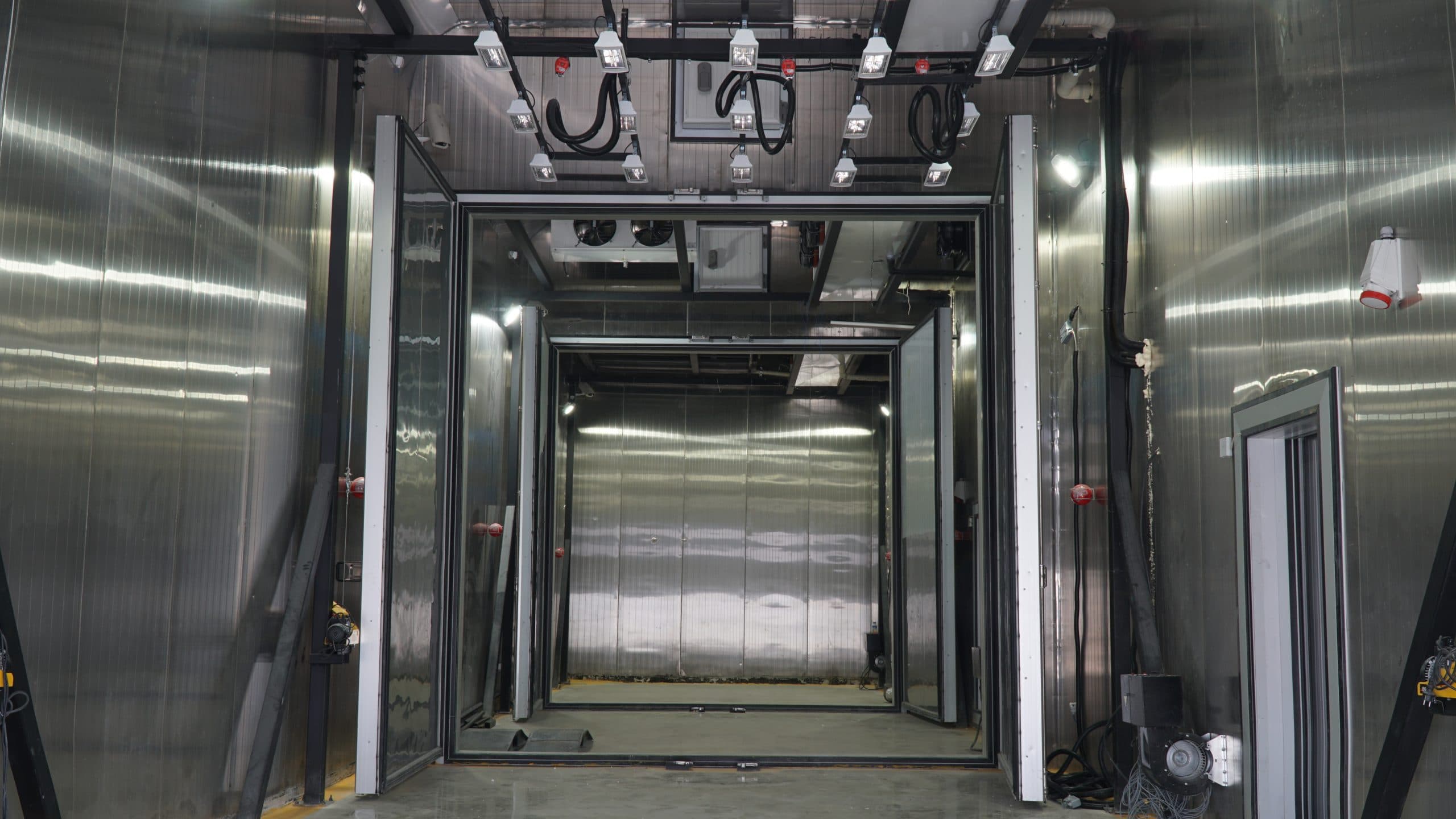
THERMAL SHOCK TEST
TURKAK Accredited Testing and Verification
STEST is accredited by the Turkish Accreditation Institution (TURKAK) and carries out its testing and verification activities in an independent, competent, and impartial manner in compliance with national and international standards.
Thermal Shock Test
The thermal shock test is performed to evaluate a product’s resistance to sudden temperature changes. Under real operating conditions, equipment may be exposed to a rapid transition from high temperature to low temperature (or vice versa) within a very short time. This test is intended to verify the material’s structural integrity, sealing performance, and functional capability.
Objective Target
- To evaluate thermal expansion, contraction, and mechanical stresses that may be induced in materials by sudden temperature changes.
- To measure the effects on solder joints, interconnects, and coatings in electronic components.
- To test sealing, insulation, and functional operability.
Test Scope Scope
- Verification of the product’s structural integrity and functional performance through simulation of rapid temperature transitions.
- Procedure I – Air-to-Air Thermal Shock: The specimen is rapidly transferred between temperature chambers to induce sudden temperature transitions.
- Procedure II – Liquid-to-Liquid Thermal Shock: The specimen is immersed in liquids at different temperatures to subject it to a temperature differential within a very short time.
Technical Implementation Process
- Thermal shock tests are conducted in accordance with MIL-STD-810, RTCA DO-160, IEC, ISO, EN, ETSI, ASTM, and other applicable national and international standards.
Application Areas Use Cases
- Aerospace and defense electronics components
- Electronic devices and control units
- Systems requiring enclosure/coating/sealing performance
- Equipment that may be exposed to rapid temperature transitions in field conditions
At STEST, we conduct thermal shock testing in accordance with MIL-STD-810 and relevant international standards, and support the verification of your products through detailed reporting at the end of the process.
CREATE A TEST APPOINTMENT REQUEST