
ENVIRONMENTAL DURABILITY TESTS
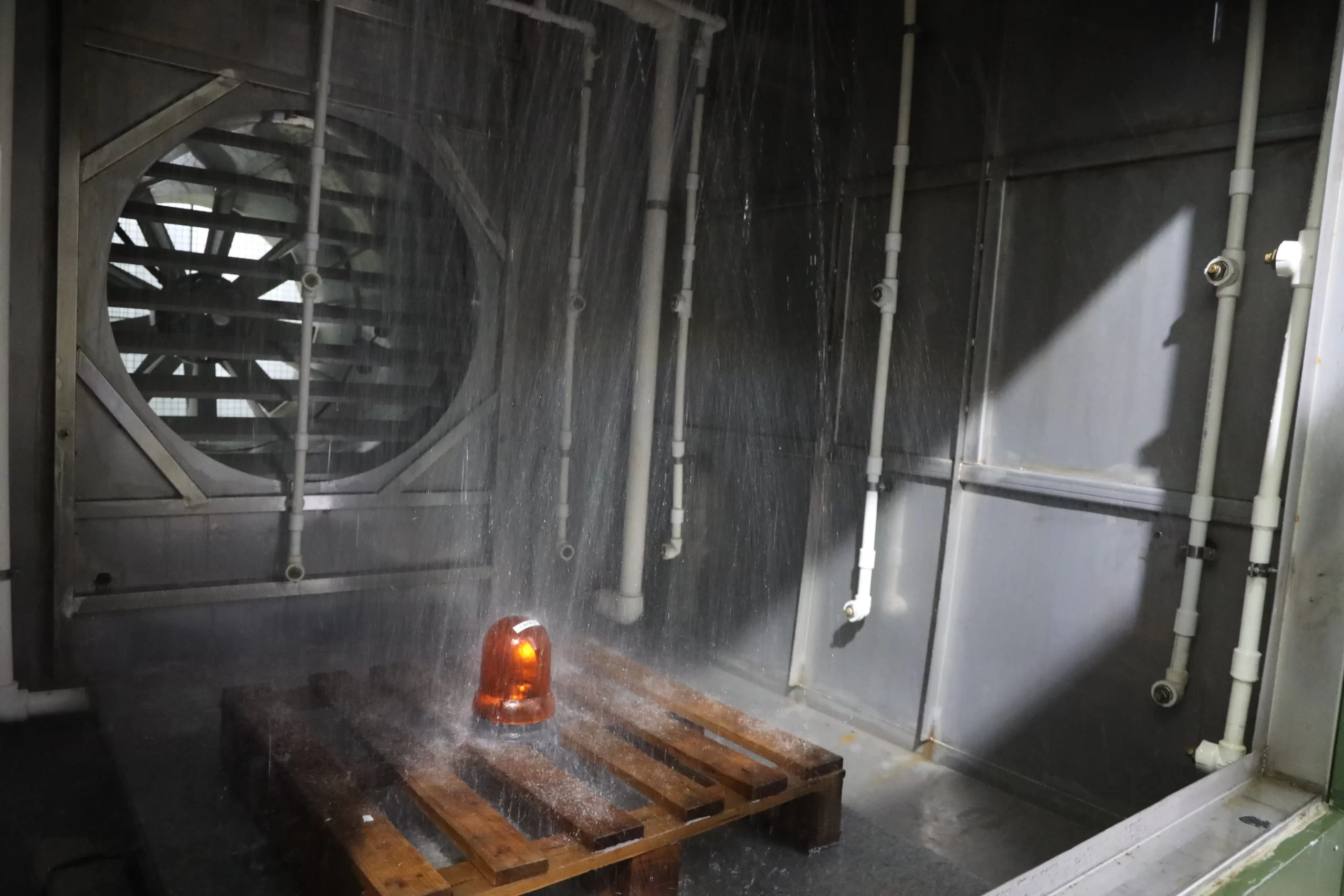
What Are Environmental Durability Tests?
Environmental durability tests are laboratory tests conducted to measure a product’s performance and reliability under harsh environmental conditions. These tests verify the product’s resistance to external factors such as temperature, humidity, vibration, shock, salt fog, pressure, and similar environmental influences.
Environmental durability tests are of critical importance particularly in the defense industry, aerospace, automotive, and industrial manufacturing sectors.
Why Are Environmental Durability Tests Conducted?
The primary purposes of environmental durability tests are:
To verify product reliability
To simulate harsh field conditions
To detect design flaws at an early stage
To certify compliance with national and international standards
To ensure product lifespan and performance continuity
Products released to the market without undergoing these tests may pose risks such as failure, performance degradation, and safety hazards.
What Are Environmental Durability Tests?
Environmental durability tests vary depending on the application area. The most common types of tests include:
Temperature Tests
High temperature test
Low temperature test
Temperature cycling test
The product’s performance under extreme hot and cold conditions is evaluated.
Humidity Tests
The product’s operability is assessed in environments with high relative humidity.
Vibration Tests
Vibration effects that may occur during transportation and operation are simulated.
Shock and Impact Tests
Resistance to sudden mechanical shocks is measured.
Salt Fog (Corrosion) Test
The corrosion resistance of metal components is evaluated.
Pressure and Altitude Tests
High-altitude conditions are simulated in a laboratory environment.
Standards Used in Environmental Durability Tests
Environmental durability tests are conducted in accordance with specific international standards. The most widely used standards include:
- MIL-STD-810
RTCA DO-160
AECTP-300
These standards define the test methodologies, durations, and environmental parameters.
In Which Industries Are Environmental Durability Tests Used?
Defense industry
Aerospace
Automotive
Electronics manufacturing
Energy systems
Industrial equipment manufacturing
These tests are particularly mandatory in military and other mission-critical systems.
How Long Do Environmental Durability Tests Take?
The test duration may vary from a few hours to several weeks depending on:
The applied standards
The type of test
The number of samples
The cycle duration