
EMC TEST LABORATORY
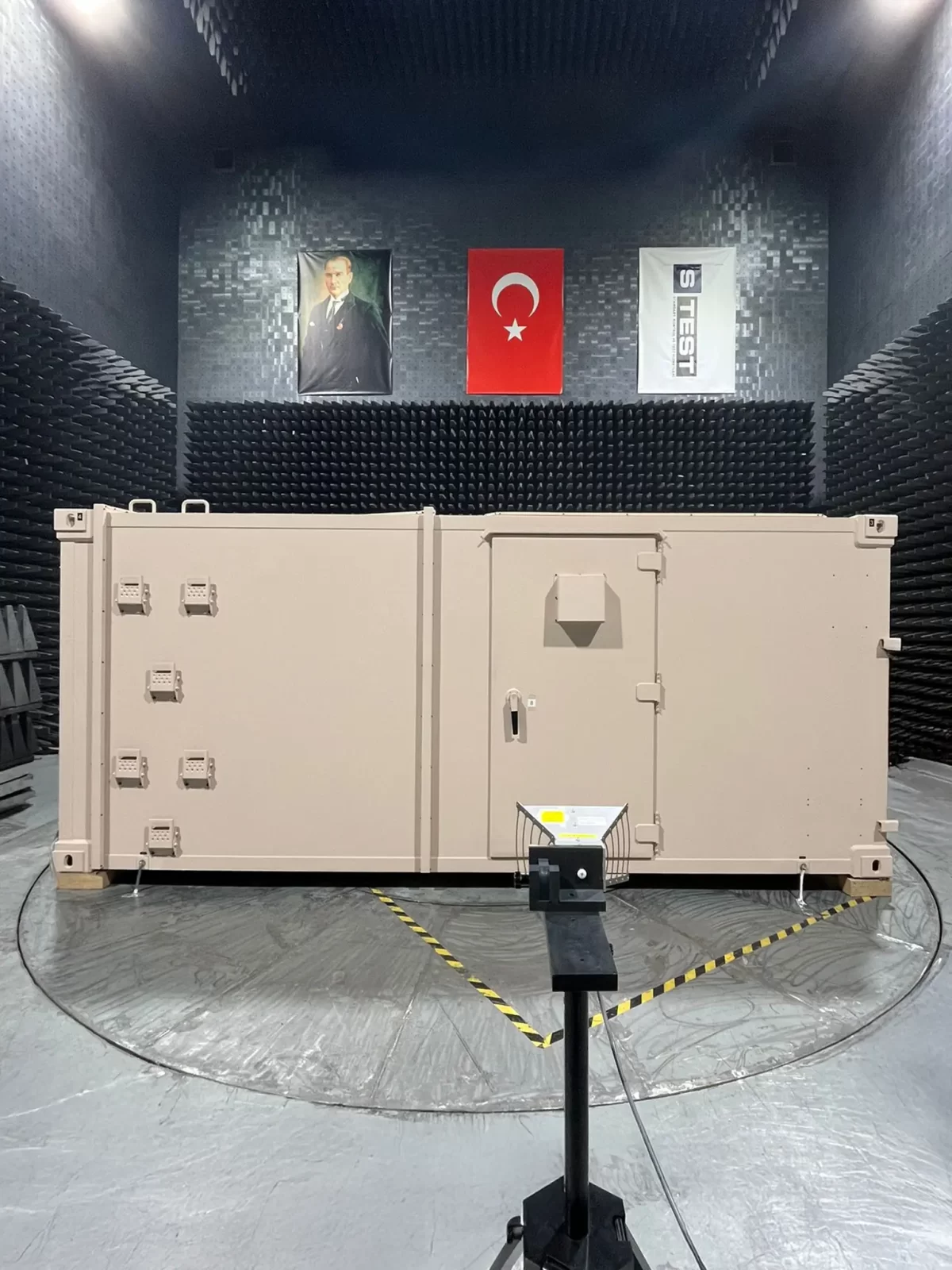
Electronic and electrical products must comply with electromagnetic compatibility requirements in order to be placed on the market safely. An EMC test laboratory is a technical facility that tests, measures, and reports the electromagnetic emission and immunity performance of devices in accordance with national and international standards.
Failure to pass EMC testing may lead to interference problems in the field, system instability, and regulatory non-compliance risks. Therefore, working with a competent EMC test laboratory is not only a technical necessity but also a matter of commercial assurance.
What Does an EMC Test Laboratory Do?
An EMC test laboratory primarily performs two main groups of tests:
Emission Tests
These tests measure the electromagnetic disturbances emitted by a device into its environment.
Conducted Emission
Radiated Emission
Harmonic Current Tests
Flicker Tests
The objective is to verify that the product does not interfere with other systems and does not contribute to electromagnetic pollution.
Immunity Tests
These tests evaluate the resistance of a device to external electromagnetic disturbances.
ESD (Electrostatic Discharge)
EFT / Burst
Surge
Radiated Immunity
Conducted Immunity
Magnetic Field Immunity
The purpose is to demonstrate that the product operates safely and reliably under real-world field conditions.
What Are EMI and EMC?
EMI (Electromagnetic Interference) refers to unwanted electromagnetic disturbances generated by a device during operation. These disturbances may negatively impact the performance of other electronic systems.
EMC (Electromagnetic Compatibility) is the ability of a device to operate satisfactorily within its electromagnetic environment without causing unacceptable interference to other systems and while maintaining immunity to external disturbances.
EMI / EMC testing evaluates both aspects together to confirm safe and compatible system operation.
Purpose of EMI / EMC Testing
The primary objectives of EMI / EMC testing are:
Measuring electromagnetic emission levels
Evaluating immunity to external electromagnetic disturbances
Preventing interaction between systems
Demonstrating compliance with applicable standards
Ensuring operational safety
These tests directly affect not only product performance but also user safety.
EMI / EMC Tests Performed Within the Scope of STEST
At STEST, EMI / EMC testing is conducted to cover a wide range of electromagnetic scenarios:
Conducted and Radiated Emission Tests
Measurement of electromagnetic disturbances transmitted via cables and radiated into the surrounding environment.
Conducted and Radiated Immunity Tests
Evaluation of product resistance to externally generated electromagnetic fields.
Electrostatic Discharge (ESD) Tests
Analysis of the impact of static electricity discharges on device functionality.
Electrical Fast Transients (EFT/Burst) Tests
Measurement of the effects of sudden voltage transients on electronic circuits.
Surge (Lightning and Overvoltage) Tests
Assessment of system resistance to high-energy voltage impulses originating from power lines.
Magnetic Field and RF Immunity Tests
Evaluation of the impact of radio frequency fields and magnetic environments on device performance.
Importance of EMI / EMC Testing
Through EMI / EMC testing:
Compatibility between electronic systems is ensured
Failures and performance degradation are minimized
Certification processes are accelerated
Export and international market access are facilitated
Corporate credibility is strengthened
Particularly in defense and aerospace applications, electromagnetic compatibility is a fundamental requirement for operational success.
STEST provides comprehensive EMI / EMC testing services covering emission, immunity, ESD, EFT, surge, and RF evaluations, verifying that products operate safely within their intended electromagnetic environments.
Results obtained through accredited test processes demonstrate compliance with national and international standards, providing companies with quality assurance, reliability, and competitive advantage.
What Should Be Considered When Selecting an EMC Laboratory?
For corporate organizations, selecting the right EMC laboratory is critical in terms of both technical and financial risk management.
1️⃣ Scope of Accreditation
It must be verified that the applicable standard to be tested is included within the laboratory’s accreditation scope.
2️⃣ Technical Infrastructure
Semi-Anechoic Chamber
Conducted and Radiated Emission Measurement Systems
ESD Test System
EFT/Burst Test System
Surge Test System
Voltage Dips and Magnetic Field Test Infrastructure
3️⃣ Experienced Engineering Team
EMC testing requires not only measurement but also technical analysis and expert interpretation.
4️⃣ Reporting Quality
Reports must be accredited, traceable, and auditable in format and content.
As Standart Kontrol ve Test Hizmetleri A.Ş.:
Operating in accordance with TS EN ISO/IEC 17025
Accredited by TÜRKAK
Providing testing services in line with current national and international EMC standards
Why Choose Us?
✔ TÜRKAK-accredited EMC laboratory
✔ Up-to-date and calibrated test equipment
✔ Experienced EMC test engineers
✔ Pre-compliance and design validation support
✔ Fast scheduling and timely reporting
How Does the EMC Testing Process Work?
Application and technical document review
Quotation and planning
Sample acceptance
Execution of relevant tests
Technical evaluation
Issuance of the test report
If non-conformities are identified, technical improvement support is provided and re-testing can be scheduled accordingly.