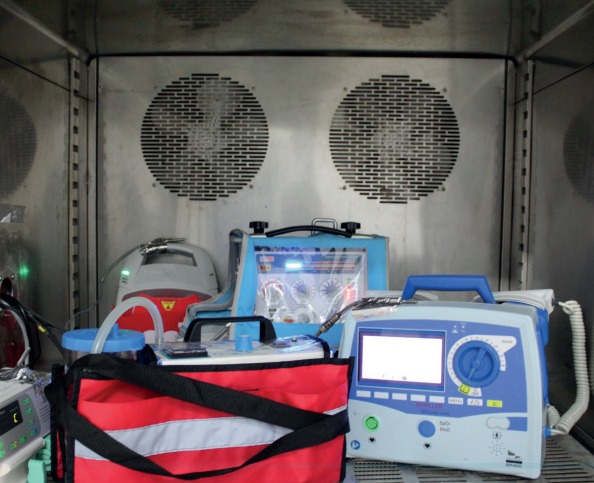
ELECTRICAL MEDICAL EQUIPMENT TESTS
Temperature & Humidity Tests
Operational Test: The device is operated between -20 °C and +50 °C.
Storage Test: The packaged device is exposed to temperatures from -40 °C to +70 °C and humidity conditions up to 95%.
Pass Criteria: No functional deviation is permitted; condensation and electronic failures must not occur.
Vibration Tests
Purpose: To simulate ambulance, helicopter, and field transportation conditions.
Method: Vibration profiles in accordance with MIL-STD-810 or IEC 60068 are applied.
Frequency Range: 10–500 Hz
Axes: Applied in the X, Y, and Z directions
Duration: Vibration profiles are executed for each axis
Pass Criteria: No mechanical loosening, cracking, or performance degradation is permitted.
Shock Tests
Purpose: To evaluate resistance to sudden impacts and jolts.
Method: Short-duration accelerations are applied (e.g., 15–30 g, 6–11 ms).
Pass Criteria: No cracks, electrical faults, or loss of function shall occur.
Mechanical Robustness (Drop Test)
Purpose: To verify durability against potential drops in field use.
Method: The device is dropped from 1 m onto a hard surface.
Corner, edge, and face drops are tested separately.
Pass Criteria: No structural breakage is permitted, and the device must remain operational.
Transportation & Storage Tests
Purpose: To assess device safety and integrity during shipment and long-term storage.
Method:
The packaged product is subjected to different temperature and humidity cycles.
Vibration and shock profiles are applied to simulate transportation conditions.