CE101 TEST
TURKAK Accredited Testing and Verification
STEST is accredited by the Turkish Accreditation Institution (TURKAK) and carries out its testing and verification activities in an independent, competent, and impartial manner in compliance with national and international standards.
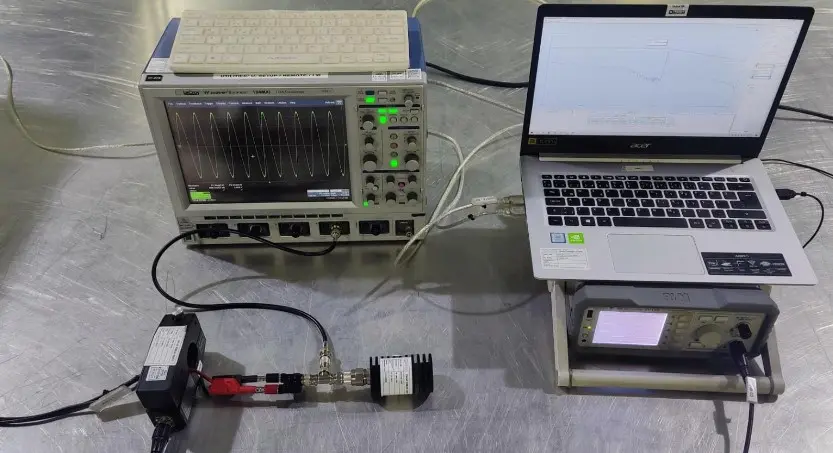
CE101 Test (Conducted Emissions on Power Leads, 30 Hz–10 kHz)
The CE101 test is a conducted emissions assessment performed in accordance with MIL-STD-461 to evaluate low-frequency electromagnetic noise generated by electrical and electronic equipment and coupled onto its power input leads. The primary objective is to ensure that equipment installed on military platforms does not inject unacceptable noise levels into shared power distribution networks, which could degrade the performance of other subsystems connected to the same supply.
Purpose of the CE101 Test Objective
- Quantify electromagnetic interference conducted onto power leads in the specified low-frequency range.
- Reduce subsystem-to-subsystem interaction and associated mission or safety risks on shared power networks.
- Support platform-level electromagnetic compatibility by demonstrating compliance with applicable limit values.
CE101 Test Scope Scope
- Applicable to equipment with AC and/or DC power input leads, as defined by the selected MIL-STD-461 revision and platform category.
- Measurements are performed with the equipment operating in representative normal modes (worst-case configurations identified where applicable).
- The test focuses on the low-frequency conducted emissions range specified for CE101.
CE101 Test Method Process
- A LISN (Line Impedance Stabilization Network) is used to stabilize line impedance and provide a controlled measurement point.
- Voltage levels are captured using calibrated EMI receivers in accordance with the defined detector and bandwidth settings.
- Results are evaluated against the limit curves and acceptance criteria specified in the selected MIL-STD-461 revision.
- The outcome clearly characterizes power-line noise coupling and supports root-cause assessment and mitigation planning when needed.
Our CE101 Capability and Infrastructure STEST
- CE101 testing is performed in line with MIL-STD-461E / 461F / 461G requirements, based on project needs and platform classification.
- Tests are conducted in our TÜRKAK-accredited shielded room in accordance with TS EN ISO/IEC 17025.
- Measurement setups are configured to match platform and program constraints while following the standard-defined methodology and instrumentation requirements.
STEST performs CE101 conducted emissions testing under MIL-STD-461 using accredited laboratory infrastructure and controlled measurement conditions required by military programs—delivering clear, traceable results and comprehensive reporting.
REQUEST A TEST APPOINTMENT